Quick Answer
Cronometer uses AI in a few specific, limited ways, Photo Logging, Voice Logging, and Coach, to make tracking faster and easier. AI does not generate our nutrition data. Every food in our database comes from a lab-tested source or a human review, checked by a real person on our nutrition data team before it’s available to you. Your information is never sold, and AI tools only ever see limited, non-identifiable data. The short version: AI helps with speed. People remain responsible for accuracy, trust, and your privacy
A Cultural Shift in Information Gathering
You used to know where an answer came from. A doctor who’d treated your family for years. A pharmacist who knew your name and your whole medicine cabinet. An older sibling who already knew flat ginger ale settled your stomach, three colds before you figured it out. Even an imperfect answer had a source you could question.
Now a chatbot compresses years of research into seconds, and a photo becomes a nutrition estimate before you’ve sat down to eat. Somewhere in there, we stopped asking where the answer came from. We just started expecting it to show up.
For a lot of things, that’s a fair trade. Wrong song, you skip it. Slow route, you’re a few minutes late. Health doesn’t work that way. Behind every search is someone trying to make sense of their own body, and that shapes decisions about their health and wellbeing in a way a playlist never will.
Thoughtful About Our Approach
Many conversations about AI open with the same worry, whether anyone says it out loud or not. As of this year, most people say they can no longer reliably tell real content from AI-generated content.³ The internet is filling up with information that sounds like research but was never actually researched.
Most people are asking whether any of it can be trusted at all. We’re asking something more specific. What should belong to people, and what can AI make more efficient, while maintaining scientific integrity?
It’s not that we’re wary of AI. We’ve been excited about where it can go for years. AI can be useful and responsible at the same time. In health, it has to be both. Here‘s how we protect our scientific integrity at Cronometer, starting with scientific rigor.

What Scientific Rigor Means
In health and science, trust isn’t given, it’s earned slowly. The National Institutes of Health defines scientific rigor as strictly applying the scientific method so a study’s design, data, and conclusions stay unbiased and can be checked and repeated by others.¹ In plain terms: a finding only counts once someone else, testing it independently, gets the same result. That’s the standard we hold our nutrition research and development to.
Our database includes lab-analyzed entries from sources like the USDA and the NCCDB (Nutrition Data Center Food & Nutrient Database). We also take in foods submitted by users and manufacturers, and every one of those gets reviewed by hand by a member of our nutrition data team before it’s added to our CRDB (Cronometer Community Database). When better data comes in, we update the entry.² (If you want the full breakdown of how our data sources stack up, here’s a closer look.)
That’s rigor in practice, and it’s the standard anything new has to meet, including AI. So where does AI actually fit? Here’s where it shows up in the app, and what it never touches.
AI Works Differently
It’s genuinely good at spotting patterns and organizing information fast. That’s a real strength. It’s just not the same strength as scientific expertise. AI doesn’t know what’s true on its own. It learns from what we feed it, which means its answers can never be more reliable than the data sitting underneath them.
That’s exactly why our numbers don’t come from AI. A model can only estimate from what it has seen. With Cronometer, you’re not getting an estimate, you’re getting lab analyzed data.

How Cronometer Is Using AI
To Speed Up the Food Logging Process
Photo Logging uses AI to analyze a picture of your meal and identify individual ingredients and quantities. That’s AI’s only job in Photo Logging, an educated guess based on the image. From there, Cronometer matches those ingredients against our existing verified database, the same one behind every other entry in the app, so the nutrition values themselves come from lab-analyzed sources, not from the AI. You review and adjust before anything gets logged, so the last word on accuracy stays yours.
Voice Logging uses AI for one job only: turning your spoken words into text and identifying ingredients from the foods mentioned. Once those foods are identified, Cronometer matches them against that same verified database for the actual nutrition values. The AI never generates a nutrition number itself, it just listens and identifies foods.
To Empower You with Better Insights
Crono Coach uses AI to look at a snapshot of your logging history and your Nutrition Report and identify patterns worth your attention. The AI’s role is pattern recognition only, it’s not generating nutrition facts, and it’s not making a call about your health. No personally identifiable information is shared with the AI, and it doesn’t retain your data or learn from it over time.
To Enable Our Staff
The team behind these features is still very much human. Cronometer is built and maintained by real people, developers, nutrition researchers, designers, and support specialists, and we’re growing that team, not shrinking it. AI didn’t build Cronometer. People did, and people still do.
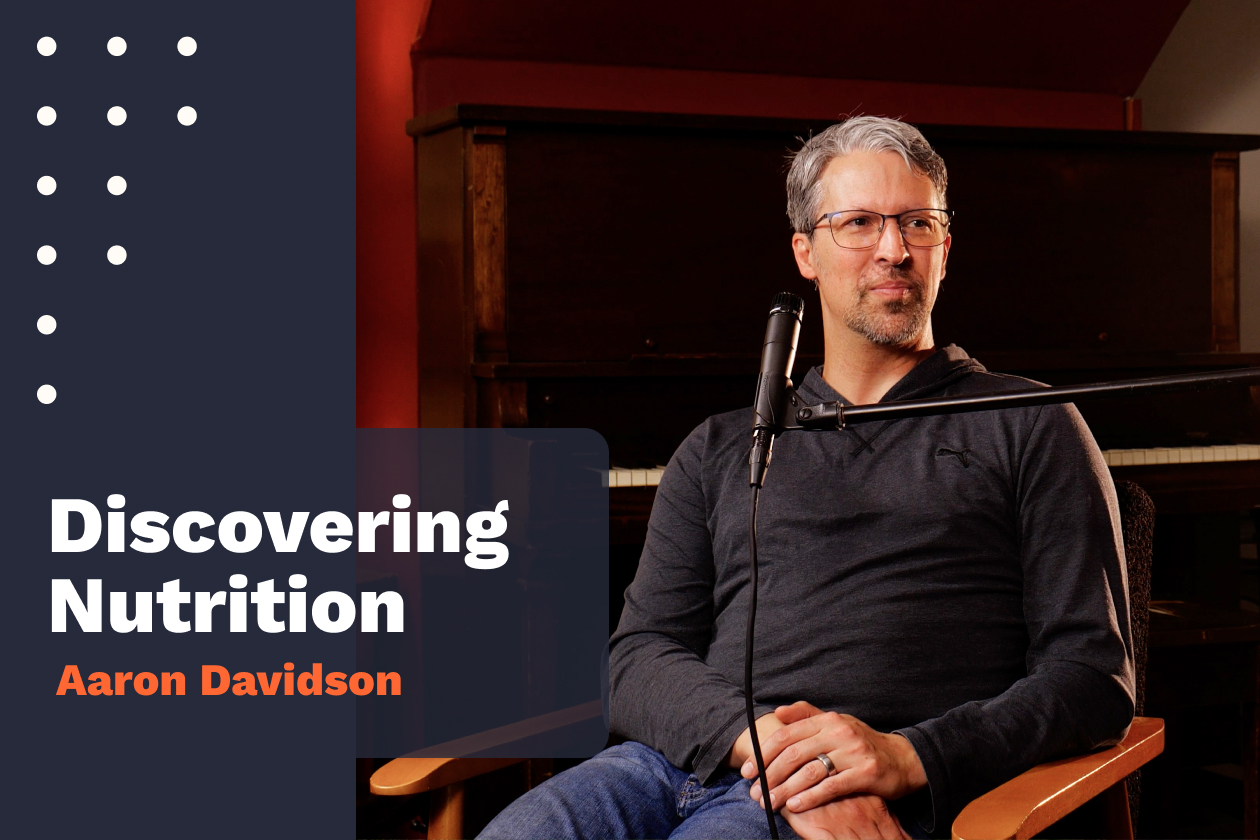
“The goal isn’t to replace thinking. It’s to leave people with more time for it,” says Aaron Davidson, Cronometer’s founder and CEO, in our recent conversation on AI, nutrition, and trust. [Watch the full conversation here.]

“The goal isn't to replace thinking. It's to leave people with more time for it.” - Aaron Davidson, CEO Cronometer
The Calls That Still Belong to You
The harder calls still belong to people, specifically, you.
Say your logs show your protein coming in well under your target every day this week. AI can spot that. It might even suggest a few reasons why such as: a schedule change, travel, or being sick. But it doesn’t know your life. Only you know what’s actually going on, and only you can decide what to do about it.
Protecting What You Share
The same thinking shapes how we handle your data. When you’re logging meals, weight, health information, or a goal you haven’t told anyone else, it’s fair to wonder who sees that and what happens to it. We don’t share personally identifiable information with the AI tools we use, and we don’t sell your data to anyone. Where AI does interact with your information, it’s working with limited, non-identifiable data. Protecting what you share with us is our responsibility, not something we hand off to AI.

Final Thoughts
Five years from now, the tools will look different. What we’re determined not to change is that people stay at the front of it, from you making decisions about your health to our team building the app and verifying the data behind it. Technology can produce an answer. It can’t stand behind one. We can, and that’s the part we won’t hand off.
See how Cronometer’s verified data works for yourself – sign up free

Frequently Asked Questions
Does Cronometer use AI?
Yes, in specific, limited ways that reduce friction. It doesn’t replace our verified nutrition data or human oversight.
Which Cronometer features currently use AI?
Photo Logging, Voice Logging, and Coach. Everything else, including the nutrition database and nutrient values, runs on verified scientific sources and human review.
Does AI generate Cronometer’s nutrition data?
No. Our nutrient data is not generated by AI. Our lab analyzed data comes from trusted sources like the USDA and the NCC. Our CRDB data has been manually reviewed by people (our Nutrient Data Team). We are constantly reviewing, maintaining and updating our database.
How does Cronometer protect user data around AI?
We limit what AI tools can access, never share identifiable information with them, and never sell your data.

About the Author
Keshia Blake is the Brand & Communications Specialist at Cronometer, where she helps translate nutrition science into thoughtful, human-centered stories that empower people to better understand their health. Her background spans healthcare, health behaviour change, advertising, creative strategy, and brand communications, bringing together evidence-based science with storytelling that makes complex topics feel relatable, accessible, and actionable.
She is passionate about exploring the hidden connections between nutrition, behaviour, long-term health, and helping readers move beyond food rules and toward a deeper understanding of their bodies.
References
- National Institutes of Health. Enhancing Reproducibility through Rigor and Transparency.
- Data Sources. Cronometer Quality Assurance. Is Your Nutrition Data Accurate? Here's What to Look For
- YouGov survey commissioned by Kaspersky, cited in Help Net Security, "9 out of 10 people can no longer distinguish real from AI-generated content," June 2026.