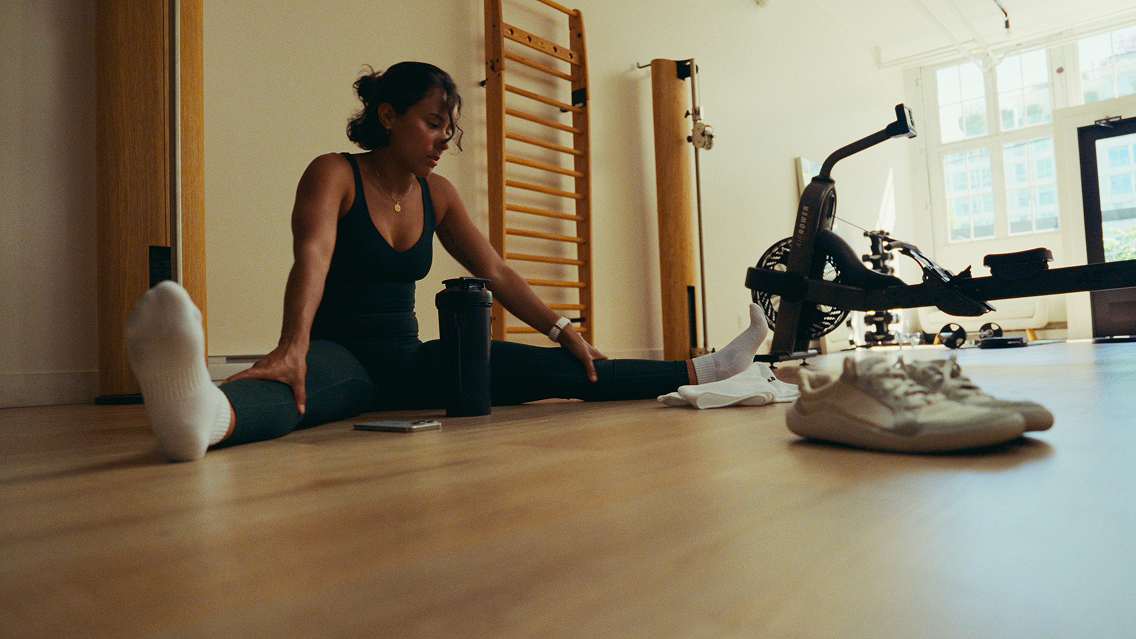
Quick Answer: Quick answer: If you strength train, your muscles can continue responding to that workout for a day or two afterward. Protein supports the muscle-building process during that time, including on days when you are not training. That is why keeping your protein target similar on training and rest days can make sense. It does not need to be exactly the same every day, and your calories and carbs may still change depending on your activity, training schedule, and goals.
A day off from training can change your eating routine. You might skip the snack you usually have after the gym or eat your meals at different times. Without realizing it, you may end up eating less protein on a day when your muscles are still responding to your last workout.
To understand why that matters, it helps to look at how long the muscle-building response lasts.
Why protein still matters between workouts
You may have heard that you need protein within 30 to 60 minutes of a workout. But your opportunity to support muscle growth doesn’t end when you leave the gym.
Researchers tested whether muscles would still respond differently to protein a full day after resistance exercise. Fifteen young men consumed 15 grams of whey protein at rest and 24 hours after one-legged resistance exercise. After exercise performed to failure, the muscle-building response to protein was greater 24 hours after training than it was in the rested condition. This suggests that muscles can remain more responsive to dietary protein the next day, helping explain why protein still matters on a rest day. [1]
A separate study in older men found that muscle protein synthesis (MPS), the process your body uses to build and repair muscle, remained elevated for up to 48 hours after resistance exercise. [2]
The Takeaway: A rest day can still be part of the muscle-building process. Keeping your protein intake relatively consistent gives your body the building blocks it needs to adapt to training and support your longer-term performance goals. Your target doesn’t have to be exactly the same every day, but taking a day off from training isn’t necessarily a reason to cut back.
Does protein need to be exactly the same each day
Not necessarily. Your protein intake does not have to land on the exact same number every day. But if building or maintaining muscle is the goal, keeping it fairly consistent can help you support the muscle-building process between workouts.
As a general guide, the International Society of Sports Nutrition recommends 1.4 to 2.0 grams of protein per kilogram of body weight per day for most healthy, active people who want to build or maintain muscle. This is a general range, not a personalized target. [3]
On rest days, you might not be as hungry or may naturally eat less. But staying intentional about meeting your protein target, even on rest days, may help support muscle building.
Your needs may differ based on your health, training, goals, and overall diet. If you already have a target from a dietitian or care team, use that plan as your reference. For more help choosing a starting point, see our Performance series article on protein, energy, and glycogen.
How calories and carbs may change on rest days
Your protein intake can stay fairly consistent across training and rest days, but that doesn’t mean every part of your nutrition plan has to stay the same.
You may use less energy on a day without a hard workout, but your total activity still matters. A rest day spent walking, working, or running errands can look very different from a quiet day at home.
Carbohydrates also help replenish glycogen, the stored carbohydrate your muscles use during exercise. This means the carbs you eat on a rest day can replace fuel used in your last workout and help prepare you for the next one. [4]
So, “rest day” alone does not tell you how much to eat. Your recent training, daily activity, upcoming workouts, and goals all provide useful context. You might keep your usual meals, adjust portions, or use different calorie and carbohydrate targets on different days.
A training day and rest day example
Here is one way that might look in practice. Imagine an 80 kg adult who strength trains several times a week and has chosen a protein target of 128 grams per day.
Because their muscles can still be responding to a previous workout on a rest day, they keep their protein target consistent. Their calories, carbs, and meal timing can still reflect the demands of each day. This is an example, not a target for everyone.
| Variable | Training day | Rest day |
| Protein | Chosen target of 128 g | Same chosen target of 128 g |
| Calories | Account for the planned workout and other activity | Account for daily activity and recovery |
| Carbs | Consider the session’s demands | Consider recent training and the next session |
| Meals | Fit around work and training | Fit around the day’s schedule |
In this example, the protein target stays consistent because the muscle-building process can continue between workouts. Calories and carbs are considered separately based on the person’s activity, training schedule, and goals.
How to review training and rest days in Cronometer
Start by logging what you eat on a few training and rest days. Compare your protein totals and look at what changes with your routine. For example, do you tend to skip a meal or snack when you are not going to the gym?
This can help you see whether your protein intake changes on rest days, even when you did not intend to change it.
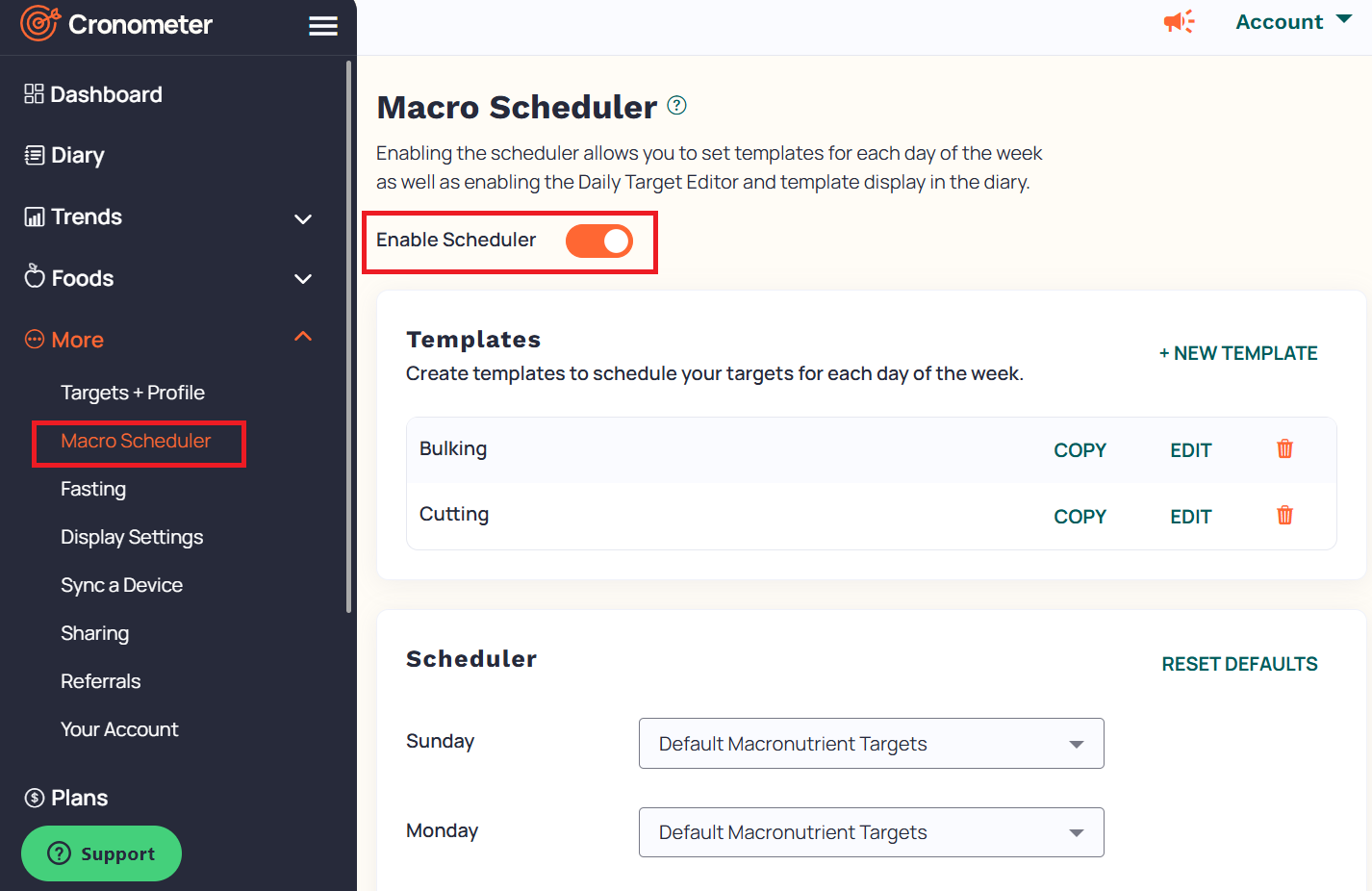
If your plan uses different targets on different days, Cronometer Gold’s Macro Scheduler lets you create and schedule separate target templates. You can keep protein consistent while changing calories, carbs, or other macros. [5, 6] On mobile:
1. Go to More > Targets > Macro Scheduler and enable the scheduler.
2. Create a training-day template using your chosen targets.
3. Create a rest-day template if you want any of your rest day targets to change.
4. Use Fixed Targets in both templates if you want to keep the same protein amount in grams while changing other macros.
5. Assign the templates to the relevant days of the week. [6]
You can also compare logged days without creating separate targets. Your diary can help you spot patterns in what you eat, but it cannot tell you on its own what caused a change in muscle growth or performance.
See Cronometer’s Macro Scheduler guide for the full instructions.

Your meals can change with your routine
Keeping your protein target similar does not mean your meals have to look the same every day.
If your meals look different on rest days, use Cronometer and check your protein total. You can switch the Macronutrient Breakdown from Consumed to Remaining to see how much protein is left toward your chosen target. This can help you decide whether your regular meals provide enough or whether you want to add another protein-rich food.
Cronometer Gold members can also use Food Suggestions to explore foods and meals that fit their remaining nutrition targets. The foods and timing can change with your routine. What matters is how the full day adds up.
The timing and foods can change with your routine. What matters is how the full day adds up.
Frequently Asked Questions
Should I eat less protein on rest days?
Not just because you are taking a day off. Your muscles may still be responding to your last workout, so keeping your protein target fairly consistent can support the muscle-building process between sessions. Your needs differ based on your health, training, goals, and any guidance from your dietitian or care team.
Is muscle still being built on rest days?
It can be. In one study, an exercised muscle showed a greater response to protein 24 hours after training than a muscle that had not been exercised. Another study found that muscle protein synthesis remained elevated for up to 48 hours in older men. These findings do not define the timeline for everyone, but they show that the muscle-building response can continue after the workout ends. [1, 2]
Should calories be lower on rest days?
Not automatically. If your calorie target already reflects your average weekly activity, you may not need to change it on rest days. If you intentionally eat more to fuel demanding training days, your rest-day intake may be lower. Either way, consider recovery from recent training and your next workout rather than cutting calories simply because you are taking the day off.
Should carbohydrates change on rest days?
Not automatically. If your daily carbohydrate target reflects your usual training schedule, you may not need to change it. If you intentionally eat more carbohydrates to fuel long or demanding workouts, a lower amount may fit on some rest days. But carbohydrates eaten on a rest day can still replace glycogen used in your last workout and help fuel your next one, especially when training sessions are close together. [4]
Can Macro Scheduler keep protein the same but change other targets?
Yes. In Cronometer Gold, you can create separate training-day and rest-day templates using Fixed Targets. Enter the same protein target in both templates, then adjust the other targets to fit your plan. [5, 6]
See Cronometer’s Macro Scheduler guide for the full instructions.
See what changes on your rest days
Compare a few logged training and rest days. Look at whether your protein intake changes when your workout routine, meal timing, or usual snacks change.
Your meals do not have to look the same every day. But if building or maintaining muscle is the goal, keeping your protein intake fairly consistent can help support the muscle-building process between workouts.
Your logged data can help you spot patterns and give you useful context if you decide to discuss your targets with a doctor, trainer, or sports dietitian.
Sources
- 1. Burd NA et al. Enhanced amino acid sensitivity of myofibrillar protein synthesis persists for up to 24 h after resistance exercise in young men. Journal of Nutrition. 2011;141(4):568–573. https://doi.org/10.3945/jn.110.135038
- 2. Bell KE et al. Day-to-Day Changes in Muscle Protein Synthesis in Recovery From Resistance, Aerobic, and High-Intensity Interval Exercise in Older Men. Journals of Gerontology Series A. 2015;70(8):1024–1029. https://doi.org/10.1093/gerona/glu313
- 3. Jäger R et al. International Society of Sports Nutrition Position Stand: protein and exercise. Journal of the International Society of Sports Nutrition. 2017;14:20. https://doi.org/10.1186/s12970-017-0177-8
- 4. Thomas DT, Erdman KA, Burke LM. Position of the Academy of Nutrition and Dietetics, Dietitians of Canada, and the American College of Sports Medicine: Nutrition and Athletic Performance. Journal of the Academy of Nutrition and Dietetics. 2016;116(3):501–528. https://doi.org/10.1016/j.jand.2015.12.006
- 5. Cronometer. How To Use Cronometer’s Macro Scheduler Gold Feature. https://cronometer.com/blog/target-scheduler/

About the Author
Keshia Blake
Brand & Communications Specialist, Cronometer
Keshia helps translate nutrition science into clear, human-centered stories that empower people to better understand their health. Her background spans healthcare, health behaviour change, advertising, creative strategy, and brand communications.